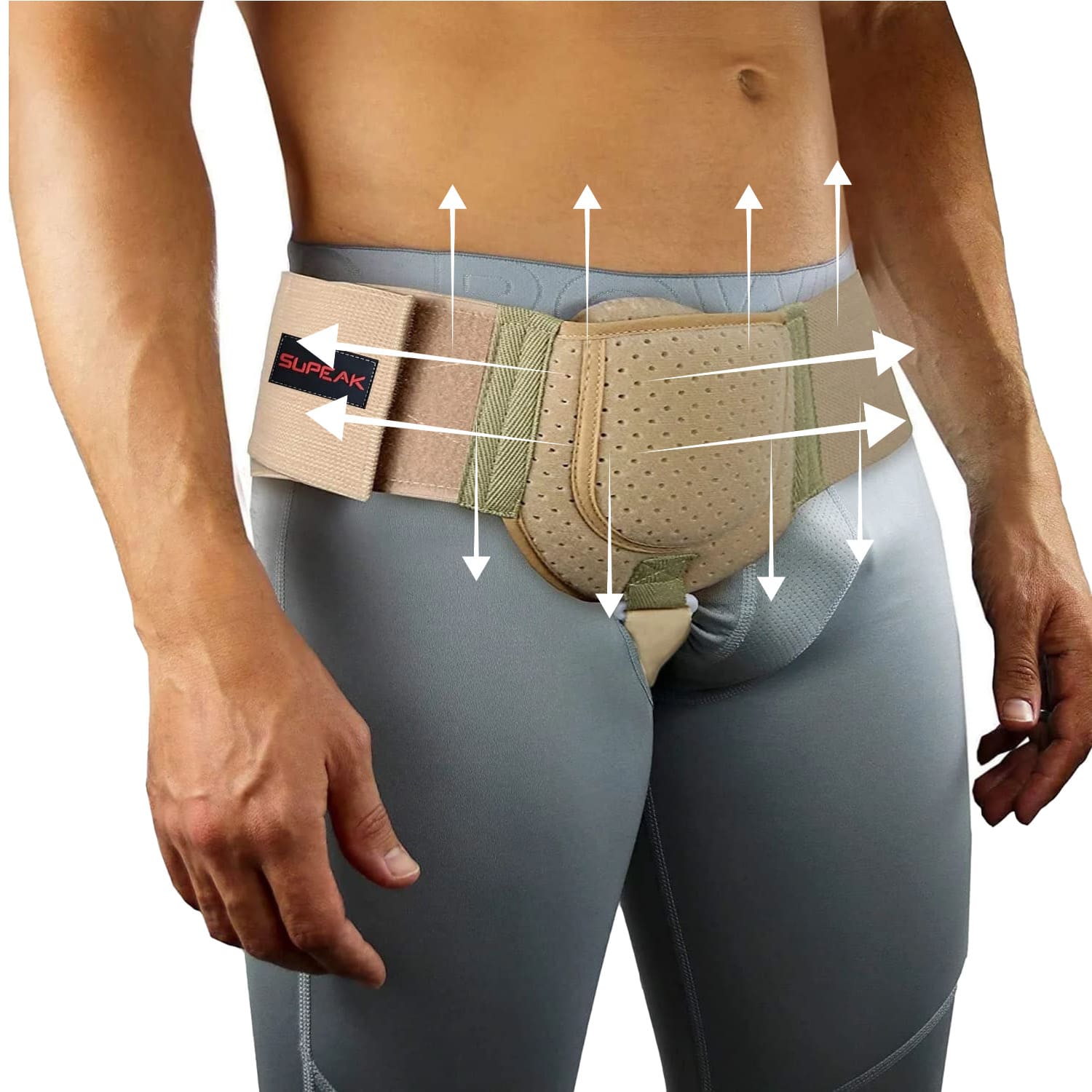
Complete Guide to Inguinal Hernia Trusses
An inguinal hernia occurs when tissue pushes through a weakened area in the lower abdominal wall, often appearing in the groin crease and, in some cases, extending toward the scrotal area.
Because inguinal hernias occur lower in the body than abdominal hernias, they require a specialised support design. A standard abdominal belt may not provide targeted support in the correct anatomical location.
An inguinal hernia truss uses a combination of an adjustable waistband, leg straps, and compression pads positioned over the affected area. This design helps keep the support securely positioned during everyday movements such as walking, standing, bending, and light activity.
While a hernia truss does not repair the underlying muscle weakness or replace medical treatment, it can provide external support and help improve comfort during daily activities when used according to professional advice.
Choosing Between Single and Bilateral Inguinal Hernia Trusses
Inguinal hernias can occur on the left side, right side, or both sides.
Single Inguinal Hernia Truss
A single truss is designed for people who require support on one side only. When ordering, select the correct side based on the location of your hernia:
- Left-sided inguinal hernia support
- Right-sided inguinal hernia support
Bilateral Inguinal Hernia Truss